
Blog
Transformative AI Impact on Team Dynamics and Psychological Safety

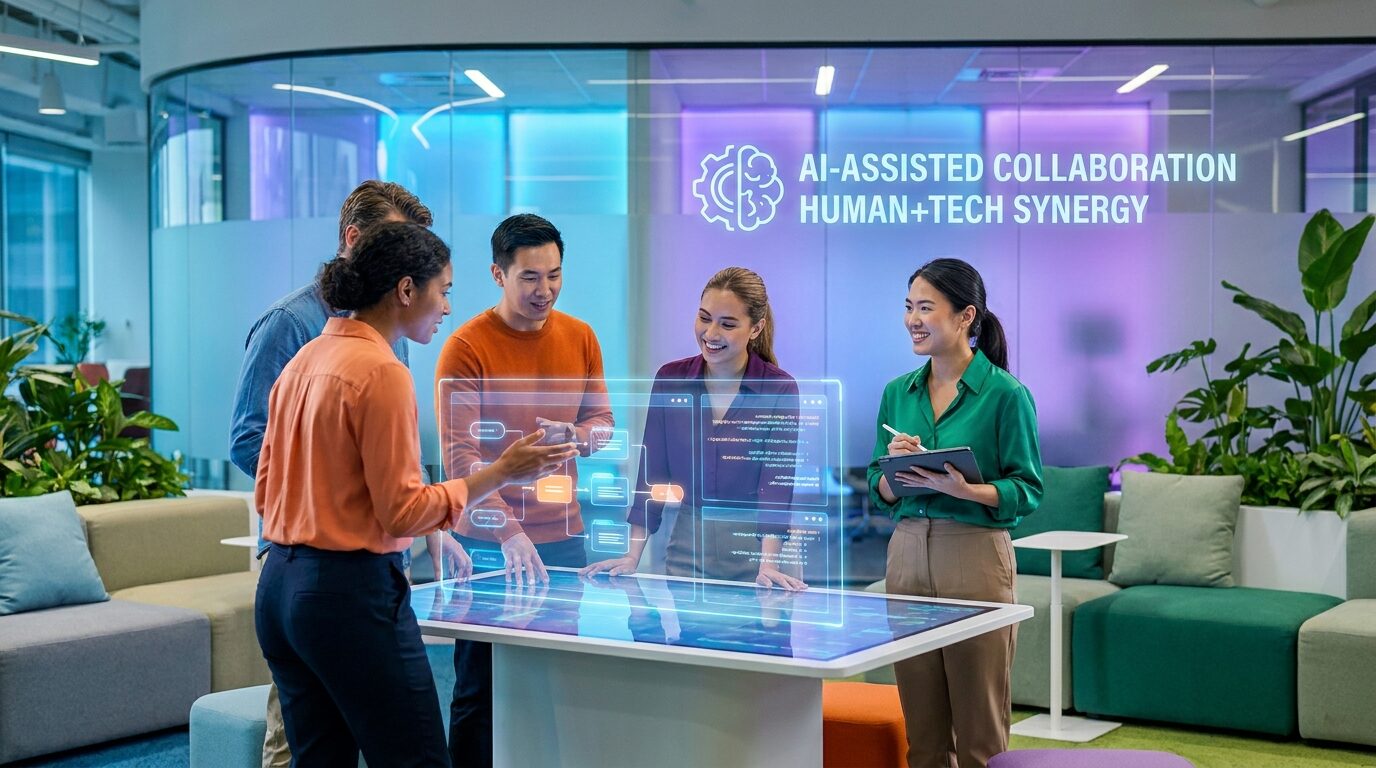
AI team dynamics are reshaping how organizations balance efficiency gains and social cohesion within teams. Artificial intelligence tools promise to streamline workflows and accelerate decision-making, but their growing presence also introduces nuanced challenges around trust and emotional safety. As AI-driven collaboration becomes more prevalent, understanding its dual impact on team efficiency and psychological safety is critical for sustaining productive workplaces.
At the forefront of AI’s benefits is enhanced operational performance. Automated data analysis, predictive modeling, and task automation reduce cognitive load on team members, enabling faster problem-solving and innovation cycles. Teams equipped with AI tools can manage complex projects with tighter timelines and improved accuracy, fostering a culture of high performance. However, this shift also disrupts traditional team dynamics, as the interplay between human intuition and AI insights demands new modes of interaction.
One key social challenge revolves around psychological safety — the shared belief that a team is safe for interpersonal risk-taking. AI’s opaque decision processes and potential bias can undermine this foundation, leading to trust erosion among team members. A Harvard Business Review article highlights how AI systems may inadvertently disrupt trust, causing employees to feel replaced or devalued, which in turn hinders open communication and collaboration (https://hbr.org/2026/02/how-to-foster-psychological-safety-when-ai-erodes-trust-on-your-team). Maintaining a psychologically safe environment requires deliberate leadership interventions that balance AI’s role as a supplementary tool rather than a decision-maker.
Cultural factors further complicate AI adoption in teams. Variations in how different regions and industries perceive AI’s role influence acceptance and integration. For instance, teams in high-trust, collaborative cultures might more readily embrace AI as an empowering assistant, while others may resist due to fears around surveillance or job displacement. Understanding these differences is essential to tailoring AI implementation strategies that respect local norms and foster inclusion.
Real-world examples underscore the importance of such tailored approaches. A technology firm in Europe applied AI-driven sentiment analysis to monitor team morale and adjusted leadership communication styles accordingly. This enhanced transparency and reinforced psychological safety, demonstrating how AI can be harnessed to strengthen emotional intelligence within leadership frameworks. Conversely, less thoughtful AI adoption in another company led to increased employee anxiety and reduced creativity, illustrating the delicate balance required between technology and human factors.
The intersection of AI and emotional intelligence presents a unique leadership challenge. Leaders must cultivate skills in interpreting AI outputs while attuning to subtle social cues within their teams. Integrating AI as a partner in creative problem-solving rather than a prescriptive authority opens avenues for novel collaboration and innovation. However, this requires nuanced training and continuous feedback loops to align AI’s capabilities with team values and goals.
From a practical standpoint, teams can adopt several strategies to optimize AI-enhanced collaboration. These include transparent communication about AI’s role, actively involving team members in AI tool selection, and fostering a culture of experimentation where AI insights are questioned and validated collectively. Such measures promote shared ownership and reduce resistance stemming from uncertainty or fear.
The evolving landscape of AI team dynamics also calls for close attention to ethical considerations and digital transformation frameworks. Exploring topics such as AI ethics and leadership helps contextualize AI’s impact within broader organizational change efforts. For those interested in the strategic implications of AI on business growth, references to related fields such as performance marketing can provide additional insights into how AI supports scaling (https://webcreativeclicks.com/performance-marketing-supports-business-scaling/).
Design teams provide a useful case study in these dynamics, where the collaborative tension between AI prototyping tools and human creativity is particularly acute. UX designers often face challenges in partnering with AI-driven engineers to balance efficiency with intuitive design thinking (https://webcreativeclicks.com/ux-designers-struggle-ai-prototyping-engineer-partnership/). Such examples illuminate the ongoing negotiation between human expertise and AI augmentation in team settings.
It is crucial to frame AI implementation as an enabler rather than a standalone strategy in workforce management. Consultation with experts in AI strategy reinforces this perspective, emphasizing the importance of integrating AI thoughtfully rather than relying on it as a panacea (https://webcreativeclicks.com/ai-is-a-tool-not-a-strategy/). This balanced approach supports sustainable team development and psychological safety, enhancing long-term success.
Additionally, multimedia aids such as diagrams illustrating interaction shifts before and after AI adoption could deepen understanding of these changes. Visualizing AI’s insertion points in team workflows helps clarify both benefits and friction points, offering a practical resource for managers and trainers seeking to guide transitions.
The confluence of AI and psychological safety marks a critical frontier in workplace dynamics. As AI continues to influence how teams communicate, trust, and perform, organizations must invest in leadership strategies that prioritize emotional and social dimensions alongside technological prowess. By fostering environments where AI is integrated with care and attention to human factors, companies can unlock the full potential of AI to build stronger, more resilient teams.
For more insights on enhancing team trust and psychological safety in the age of AI, resources such as the Technology Review article on creating psychological safety (https://www.technologyreview.com/2025/12/16/1125899/creating-psychological-safety-in-the-ai-era/) and the Schulmeister Consulting piece on strengthening teams through psychological safety (https://www.schulmeister-consulting.com/en/magazine/overview/detail/psychological-safety-ai-strengthen-your-team) offer in-depth perspectives.
Ultimately, navigating AI team dynamics demands a sophisticated balance between leveraging AI’s efficiency and nurturing the human connections that underpin collaboration. Success hinges on adaptive leadership, cultural sensitivity, and continuous dialogue to align AI innovations with team values and psychological safety.