
Blog
Master Local-First Web Development: Practical Insights for 2026

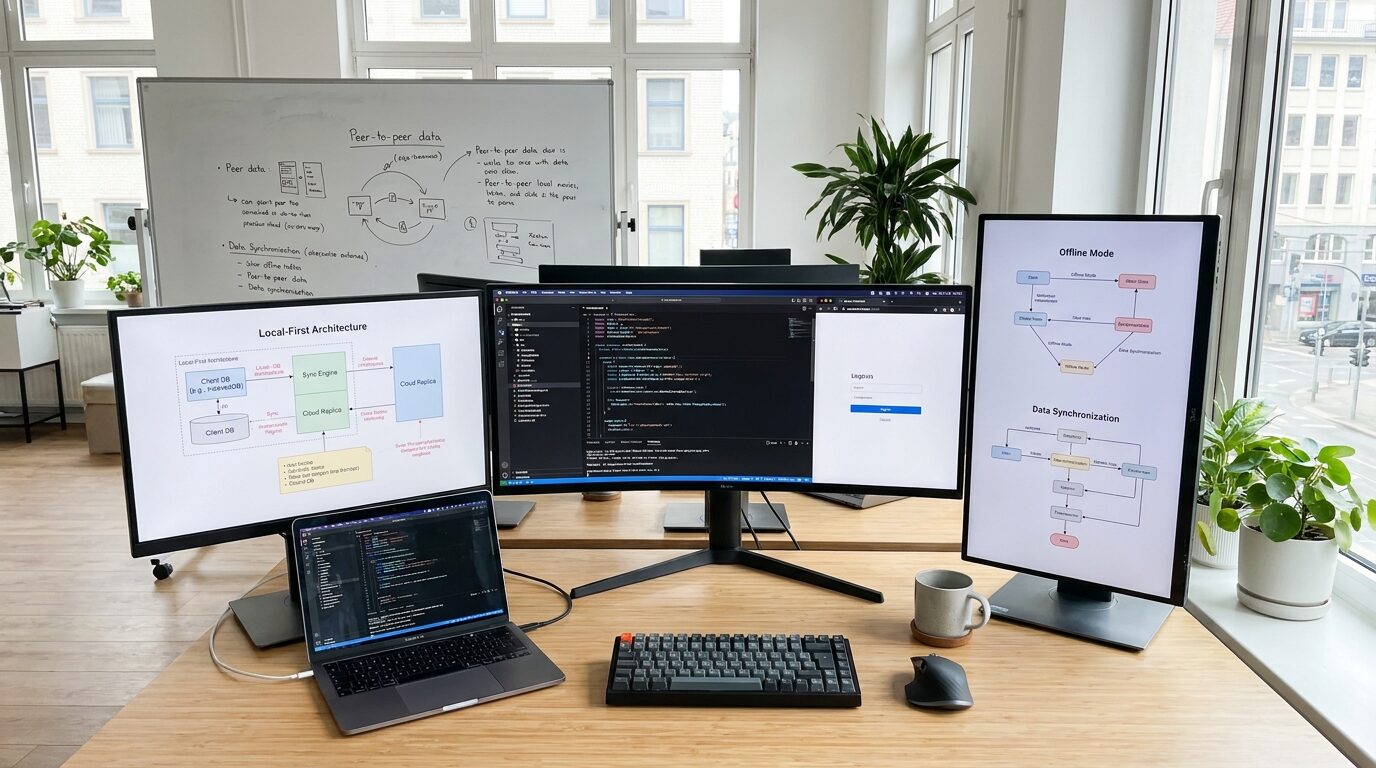
Local-first web development is redefining how web applications handle data, emphasizing offline availability, real-time synchronization, and enhanced user control. This approach addresses longstanding challenges in traditional server-first web architecture, where constant connectivity and centralized data storage often limit performance and user experience.
At its core, local-first web development prioritizes keeping user data stored and processed locally before synchronizing with cloud services if needed. This stands in contrast to server-first models where every interaction typically involves back-and-forth communication with remote servers. By enabling offline-first database capabilities and immediate local responsiveness, developers can create web applications that continue functioning seamlessly without internet access, improving reliability and reducing latency.
One distinguishing aspect of local-first designs is their robust synchronization mechanisms. These systems handle data conflicts and merges gracefully, using advanced algorithms to ensure consistency across distributed instances. Technologies such as Yjs, AutoMerge, and RxDB facilitate this by providing conflict-free replicated data types (CRDTs) and operational transformation techniques. These tools allow developers to build collaborative real-time apps where multiple users interact with the same datasets locally, resolving divergent states without data loss.
The architectural philosophy underlying local-first web development extends beyond technical implementations; it reframes data ownership and security. Storing data locally means users retain primary control over their information, reducing dependency on centralized servers and mitigating risks such as data breaches or service outages. Encrypting data at rest and in transit complements this strategy by maintaining confidentiality even during synchronization processes.
Understanding local-first architecture also involves recognizing the nuances that differentiate it from offline-first and Progressive Web Apps (PWAs). While offline-first strategies focus primarily on usability without network access, local-first integrates this with seamless synchronization and conflict resolution, elevating user experience and data integrity. PWAs provide app-like interfaces and can cache data locally, but their synchronization capabilities are typically less sophisticated than those in local-first frameworks.
Practical adoption of local-first development benefits from exploring frameworks and libraries geared toward these goals. RxDB offers a client-side database with automatic replication features; Yjs enables real-time collaborative editing through CRDTs; and AutoMerge provides a straightforward API for merging data changes in disconnected scenarios. Detailed tutorials on these tools can accelerate implementation while addressing common pitfalls such as data consistency and performance bottlenecks.
Performance optimization in local-first web development is critical, as storing and processing data locally shifts the computational load to client devices. Developers must balance fast data retrieval with minimal resource consumption, using strategies such as indexed data structures and incremental synchronization. The result is a fast local-first website that meets modern expectations for speed and responsiveness without relying heavily on network conditions.
Security considerations are paramount when data resides on local devices. Encryption, user authentication, and secure key management become essential to protect sensitive information. Additionally, implementing robust data synchronization protocols reduces the risk of data corruption or unauthorized access during transmission.
Case studies illustrate the growing viability of local-first applications across sectors. For example, collaborative text editors and note-taking apps leverage CRDTs to enable offline editing and multi-user collaboration without server bottlenecks. Similarly, AI-focused local-first applications are emerging, where privacy and responsiveness are critical, showcasing how this architecture can support advanced functionalities beyond traditional use cases.
To deepen understanding of modern web application design and local-first strategies, resources like Smashing Magazine’s comprehensive guide on local-first web architecture provide in-depth analysis and best practices. Their coverage includes architectural diagrams and code examples that unpack synchronization techniques and conflict resolution mechanics.
Equally important is a grasp of precise time synchronization methods such as those explained in CloudSwit.ch’s blog on time synchronization protocols. Accurate timestamps are vital for merging concurrent changes effectively in distributed local-first apps, ensuring data consistency aligns with real-world timelines.
Understanding how local-first fits into broader web app architectures can also be enhanced by exploring Microsoft’s documentation on common web application architectures. This resource contextualizes local-first in relation to server-centric and cloud-native patterns, providing a balanced view for developers evaluating architectural strategies.
Developers rising to the challenge of local-first web development should also consider user experience implications. Offline availability must be paired with intuitive feedback and seamless syncing indicators to maintain transparency and trust. Performance benchmarks and practical tutorials, like those found in broader web development trend discussions—including web design trends for speed and conversions in 2026—offer valuable guidance.
Moreover, integrating AI as a tool within local-first frameworks without treating it as a strategy, a distinction emphasized in the perspective on AI’s role in development, helps clarify where local-first architectures shine. They provide a robust, privacy-conscious foundation upon which AI functionalities can operate at the edge.
SEO plays a crucial role in disseminating knowledge related to local-first web development. Strategies outlined in top SEO strategies for 2026 highlight targeting long-tail keywords and user questions to tap emerging interest efficiently. Comprehensive hub pages explaining local-first concepts and tutorials can quickly establish authority in this niche.
In essence, local-first web development offers a compelling alternative to traditional server-first approaches, enhancing offline capabilities, synchronization, and security. As more applications demand seamless, resilient, and user-empowered interactions, this architectural philosophy is poised to gain traction. Developers who master these principles and tools will be well-positioned to lead in creating the next generation of responsive, offline-capable web applications.