
Blog
Complete On-Page & Technical SEO Optimization Guide 2026: Master Every Element

On-page and technical SEO optimization are the foundation of any successful search strategy. While content quality matters, a website that fails on technical SEO fundamentals is like building a mansion on sand — eventually, it will collapse.
In 2026, the gap between winners and losers in search isn’t determined by who has the best content. It’s determined by who has perfected the entire optimization ecosystem: technical infrastructure, on-page elements, user experience, and semantic relevance.
This comprehensive guide breaks down exactly what you need to optimize and why it matters.
Why On-Page and Technical SEO Still Matter in 2026
Some marketers claim SEO is dead. Others say AI has replaced traditional ranking factors. Both are wrong.
According to Search Engine Land’s 2026 analysis, we’re actually seeing higher, not lower, SEO standards:
- HTTPS adoption is now 91%+ — and Google penalizes HTTP sites
- Title tag adoption reaches nearly 99%
- Viewport meta tags appear on 93%+ of sites
- Canonical tag adoption rose from 65% (2024) to 67%+ (2025)
- 404 errors declined to 13% from 14%
The market is consolidating around best practices. Sites that implement them properly rank. Sites that don’t? They disappear.
This is your competitive advantage: While 25% of websites still have outdated technical foundations, optimizing yours will immediately boost visibility.
Part 1: Technical SEO Optimization in 2026
1. Core Web Vitals: The User Experience Foundation
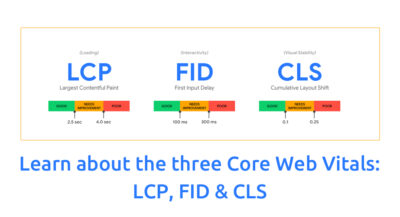
Core Web Vitals determine whether your site provides a good user experience. Google’s official data shows that pages ranking at position 1 are 10% more likely to pass Core Web Vitals thresholds than pages at position 9.
The three metrics you must optimize:
a) Largest Contentful Paint (LCP) – Target: <2.5 seconds
LCP measures how fast the main content loads. Most LCP issues stem from:
- Unoptimized hero images (serve AVIF or WebP format for 30-50% better compression)
- Render-blocking CSS and JavaScript resources
- Slow server response times (TTFB > 600ms)
- Client-side rendering delays
Fix:
- Add
fetchpriority="high"to your LCP element - Use a CDN to reduce geographic latency
- Implement server-side rendering (SSR) for the initial page load
- Eliminate render-blocking resources from the critical path
b) First Input Delay (FID) / Interaction to Next Paint (INP) – Target: <200ms
This metric measures how responsive your site is to user interactions (clicks, scrolls, key presses). A site that feels laggy loses both users and rankings.
Fix:
- Reduce JavaScript execution time by breaking up long tasks
- Defer non-critical JavaScript
- Use modern bundling tools (Webpack, Rollup) to reduce bundle size
- Implement web workers for heavy computations
c) Cumulative Layout Shift (CLS) – Target: <0.1
CLS measures unexpected layout shifts that degrade user experience (ads popping in, images loading and pushing content down, etc.).
Fix:
- Define size dimensions for all images and videos
- Reserve space for ads before they load
- Avoid injecting content above existing content
- Use
transformandopacityfor animations instead of changing layout properties
2. Server Response Time (TTFB): The Invisible Ranking Factor
Time to First Byte (TTFB) is how long it takes your server to respond to a request. The gold standard in 2026 is under 200ms.
Slow TTFB cascades into poor LCP, which cascades into lower rankings.
Optimize:
- Implement edge computing (Cloudflare, Fastly, AWS CloudFront)
- Use aggressive HTTP caching (cache-control headers, browser caching)
- Optimize your database queries
- Consider a headless or static site architecture
- Use WordPress caching plugins like WP Rocket (which you already have)
3. Mobile-First Indexing: Non-Negotiable
Google crawls and indexes the mobile version of your site first. If your mobile site is slow or broken, your rankings suffer immediately.
Audit:
- Test your site on mobile using Google PageSpeed Insights
- Check mobile usability in Google Search Console
- Ensure all interactive elements are mobile-friendly (buttons, forms, links)
- Test on actual devices, not just browser emulation
4. HTTPS Security: A Ranking Signal
Running HTTP in 2026 is a direct ranking penalty. Implement:
- Valid SSL certificate from a trusted certificate authority
- Auto-renewal through Let’s Encrypt or your hosting provider
- 301 redirects from all HTTP URLs to HTTPS equivalents
- Security headers (HSTS, Content-Security-Policy, X-Frame-Options)
Your host likely provides free SSL certificates — use them.
5. Crawlability & Indexation
Search engines (and AI crawlers) can only rank what they can find and understand.
Check:
- Robots.txt health: Use Google’s robots.txt tester to ensure you’re not accidentally blocking crawlers
- Sitemap.xml: Submit your XML sitemap to Google Search Console
- Broken links: Audit for 404s and dead internal links
- Redirect chains: Avoid A → B → C redirect chains. Keep redirects to single hops. Every hop loses ~1% link equity.
- Crawl depth: Keep important pages 3 clicks from the homepage
6. Structured Data (Schema Markup): Feeding the AI Era
Structured data helps search engines and AI systems understand your content better. In 2026, structured data is no longer optional.
Implement:
- Schema.org markup: Use appropriate types (Article, Product, Review, LocalBusiness, Event, etc.)
- FAQ schema: If you have a FAQ section, mark it up with FAQPage schema
- breadcrumb schema: Help crawlers understand site hierarchy
- Organization schema: Claim your brand in search results
- Local business schema: If you serve a specific geographic area
Your Rank Math Pro plugin makes this easy — use it to add schema without manual coding.
7. Managing AI & LLM Crawlers (New in 2026)
AI crawlers are now major traffic sources. In 2025, growth was significant:
- GPTbot: 55% increase (2.9% → 4.5% on desktop)
- Claudebot (Claude): Nearly doubled (1.9% → 3.6%)
- Petalbot (Baidu): 4.0% on desktop (new tracking in 2025)
- Ccbot (Commoncrawl): Growing steadily
Decide: Do you want these crawlers indexing your content?
- To block them: Add to robots.txt:
User-agent: GPTbot

Disallow: / - To allow them: No action needed (they respect robots.txt by default)
Part 2: On-Page SEO Optimization
1. Title Tags: Your First Impression
Title tags are your headline in search results. In 2026, we’re seeing clickbait-style titles with personality outrank traditional “SEO optimized” titles.
Old approach: “Best Email Marketing Software 2026 – 25 Tools Reviewed”
New approach: “We Tested 25 Email Tools. Here Are the 3 That Blew Us Away.”
Best practices:
- Length: 50-60 characters (fits completely in search results)
- Keyword placement: Include your target keyword, but naturally
- Brand name: Include your brand if space allows
- Emotional triggers: Use power words (how to, best, proven, secret, etc.)
- Front-load keywords: Put the most important term first
Example:
Best Email Marketing Tools 2026 | 25 Tested, 3 Winners | [Your Brand]
2. Meta Descriptions: Your Sales Pitch
Meta descriptions are shown in search results (though Google sometimes rewrites them). They’re your chance to earn the click.
Best practices:
- Length: 150-160 characters
- Include target keyword: Google bolds matching keywords
- Include a benefit: “Learn why X is 3x faster than alternatives”
- Include a CTA: “Discover the 5 secrets. Start free today.”
- Unique per page: Every page should have a unique description
3. Heading Structure: Semantic SEO
Headings tell Google (and users) what your content is about.
Best practices:
- One H1 per page: Your H1 should match (or closely match) your target keyword
- Logical hierarchy: H1 → H2s → H3s. Never skip levels (no H2 → H4)
- Natural placement: Don’t keyword-stuff headings
- Clear structure: Headings should outline your content’s logical flow
Example hierarchy for this article:
H1: Complete On-Page & Technical SEO Optimization Guide 2026
H2: Why On-Page and Technical SEO Still Matter in 2026
H2: Part 1: Technical SEO Optimization in 2026
H3: 1. Core Web Vitals
H3: 2. Server Response Time
4. URL Structure: Clear & Keyword-Rich
Clean URLs help both users and search engines.
Best practices:
- Use hyphens, not underscores: /best-email-tools (not /best_email_tools)
- Include target keyword: /seo-optimization-guide-2026 (better than /article-123)
- Lowercase only: Avoid mixed case
- Keep it short: Shorter URLs rank better than long ones
- Avoid parameters: /?id=12345 is worse than /product-name
5. Internal Linking: Distribute Authority
Internal links serve two purposes: they guide users through your content and distribute page authority across your site.
Strategy:
- Link to pillar pages: Link from posts to your main category/topic pages
- Use descriptive anchor text: “learn about technical SEO” (not “click here”)
- Limit links per page: 50-100 links is reasonable, 200+ is excessive
- Link to relevant content: Only link to pages that actually relate to the context
- Create topic clusters: Link related articles together to establish topical authority
See how this post links to our previous guide on E-E-A-T and content quality — that’s internal linking done right.
6. Keyword Optimization: Still Matters, But Differently
Exact-match keywords are losing importance, but keyword relevance remains critical.
Modern approach:
- Primary keyword: Include your main keyword in H1, first 100 words, and meta description
- Related keywords: Include semantic variations (synonyms, long-tail versions)
- Natural language: Write for humans first, search engines second
- Keyword density: Aim for 1-2% keyword density (roughly 1 instance per 100 words)
- LSI keywords: Use naturally occurring related terms that help Google understand topical relevance
7. Image Optimization: More Than Just Pictures
Images are ranking factors now. Optimize them:
- File size: Compress aggressively (use AVIF or WebP format)
- Descriptive filenames: /seo-optimization-chart.jpg (not /image-1.jpg)
- Alt text: Describe what’s in the image for accessibility and SEO
- Image captions: Add context around important images
- Responsive images: Use srcset to serve different sizes for different devices
The On-Page SEO Checklist
Before publishing any post, verify:
- ☐ Title tag: 50-60 characters, includes target keyword, compelling
- ☐ Meta description: 150-160 characters, unique, includes CTA
- ☐ H1 tag: Present, matches/includes target keyword
- ☐ Heading hierarchy: Logical structure (H1 → H2 → H3)
- ☐ URL: Clean, keyword-rich, short, no parameters
- ☐ Internal links: 3-5 contextual internal links to relevant pages
- ☐ External links: 3-5 links to authoritative external sources
- ☐ Images: Optimized, with descriptive alt text
- ☐ Target keyword: Appears in first 100 words and throughout naturally
- ☐ Schema markup: Implemented (Rank Math makes this easy)
- ☐ Readability: Clear formatting, short paragraphs, bullets where appropriate
- ☐ Word count: 2,000+ words for competitive topics, 1,000+ for niche topics
Tools to Audit Your Current Site
You already have several powerful tools installed:
- Rank Math Pro (installed): Use for on-page optimization, schema markup, and SEO analysis
- WP Rocket (installed): Optimize Core Web Vitals through caching
- Google PageSpeed Insights (free): Check Core Web Vitals in real time
- Google Search Console (free): Monitor rankings, crawl errors, indexation
- Ahrefs Site Audit (paid, free version available): Comprehensive technical SEO audit
- Semrush (paid): Technical SEO, on-page optimization, competitor analysis
The SEO Optimization Sequence for 2026
Don’t try to do everything at once. According to Involve Digital’s technical SEO guide, the optimal sequence is:
Step 1: Fix Technical Foundation (Weeks 1-2)
- Ensure HTTPS is properly configured
- Fix crawl errors and broken links
- Improve Core Web Vitals (prioritize LCP first)
- Implement schema markup
Step 2: Optimize Existing Content (Weeks 3-6)
- Update title tags and meta descriptions
- Improve heading structure
- Add internal links strategically
- Refresh old content with new data
Step 3: Build Topical Authority (Weeks 7+)
- Create pillar content covering your core topic
- Create cluster content (specific subtopics)
- Link pillars and clusters together
- Maintain consistent publication schedule
This approach creates quick wins (technical fixes produce results within weeks) while building long-term authority.
Common On-Page & Technical SEO Mistakes to Avoid
❌ Mistake #1: Ignoring mobile experience
Google indexes the mobile version. If it’s slow or broken, you lose rankings immediately.
❌ Mistake #2: Keyword stuffing
Modern Google understands intent and semantic meaning. Cramming keywords sounds unnatural and hurts rankings.
❌ Mistake #3: Poor heading hierarchy
Headings help Google understand your content structure. Skipping levels or missing H1 confuses crawlers.
❌ Mistake #4: No internal linking strategy
Internal links distribute authority and establish topical relevance. Without them, each page struggles independently.
❌ Mistake #5: Ignoring Core Web Vitals
You can have amazing content, but if your LCP is 5+ seconds, Google will rank you lower.
❌ Mistake #6: Duplicate content without canonicals
If you have similar content across multiple URLs, use canonical tags to tell Google which version to prioritize.
Final Thoughts: Why This Matters in 2026
SEO isn’t dead. It’s not been replaced by AI. It’s evolved.
The websites ranking in 2026 aren’t the ones with the best shortcuts or the cleverest tricks. They’re the ones that:
✓ Have bulletproof technical foundations
✓ Optimize every on-page element strategically
✓ Provide genuine, experience-driven content
✓ Build topical authority through consistent optimization
✓ Understand user intent and deliver exactly what searchers need
If you implement the strategies in this guide — even just the top 5 — you’ll be ahead of the vast majority of websites competing for your keywords.
Start with your technical foundation. Then optimize your on-page elements. Then build your content authority. Do these three things consistently, and search visibility will follow.
Ready to audit your site? Start here:
- Run your site through Google PageSpeed Insights
- Check Google Search Console for crawl errors and indexation issues
- Audit your top 10 pages using Rank Math’s built-in SEO score
- Create a 30-day optimization plan
- Measure and iterate based on real data
That’s how you win at SEO in 2026.